

 WealthQuest for Teens is an online program which teaches teens (ages 14-19) financial responsibility. Retailing for $39.95, WealthQuest for Teens is a great value whether you have one teenager or multiple teenagers, because all of the components are reproducible. The WealthQuest for Teens package includes an online video seminar with an online, interactive (but printable) workbook for your teenager, a Quick Start Guide e-book for your teenager, and a free Parent’s Guide. Jill Suskind, who is a high school teacher, created WealthQuest for Teens from her personal financial story and a great desire to meet the needs of her students. “As a teacher, her passion is teaching the principles of success. While all of the lessons offered through WealthQuest for Teens online products are about money and wealth building, they are really about wealth in all areas of life.”
 Kids will enjoy the videos and the practical lessons they encounter as they go through this program. They learn how to give, save, and spend wisely – all skills that are necessary for them to be successful adults.
 When we received WealthQuest for Teens, the first thing we did was to view the video portion of the program and complete the seminar workbook. Seven video modules cover topics such as: “The First Thing You Need in Order to Become Rich: Income,” “The Second Thing You Need in Order to Become Rich: Knowledge About Money,” “The Third Thing You Need in Order to Become Rich: A Great Money Management System,” “The Fourth Thing You Need in Order to Become Rich: A Really Good Reason,” “Your Habits and Attitudes Determine Your Net Worth,” and “A Look at Financial Freedom.” One minor complaint my kids had during the video seminar was the inability to rewind the videos. There were a few times where they didn't quite catch something and wanted to here it again, but we would have to start the video from the beginning to here it again. I think that incorporating the ability to rewind would enhance the overall experience. The topics covered, while not difficult, are foreign to most teens and take some time to digest. Since I have been using this with 2 teens and 1 pre-teen (who can't be left out of anything), I printed the seminar workbook pages at the end of the videos and we worked on them as we discussed the concepts that had been presented. I think this allowed them to have more time to process the information, reflect on what had been presented, and hear from mom some of the financial mistakes that I have made. The characters in the videos are Jill Suskind, the creator of the program, and multiple peer characters. My kids enjoyed the fact that the videos are not just a bunch of adults telling them what to do. It took us 7 sessions of around an hour to watch each video, discuss, and work through the workbook. That is a little longer than it should have taken us, but, my kids tend to 'chase rabbits,' so our discussions had to be redirected - so to speak - many times.
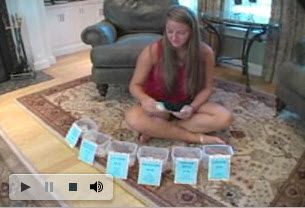 For the second and third weeks of the program, the kids completed their Quick Start E-Book. This is a 30-Day journal type workbook which gives kids plenty of opportunity for reflection, planning, and thought about how they really want their money to work for them. The crux of the whole system is the "Silo System." This is something we have had fun putting together. I didn't have enough containers laying around to set up each child a silo system in containers; and, I have learned enough about money management to know that since I didn't have the cash to spend on it, I couldn't purchase containers. So, we set up our silos in zip-lock storage bags which we labeled with permanent marker. We don't have a lot of storage space, either, so the bags were perfect for us. One of my teens works and has gotten into a horrible debit card dependence. By setting up his silos, and living on cash, he has been able to see his bank accounts grow and he has begun keeping meticulous records about where he spends. My 2 younger children set up their silos and are distributing the small amount they earn from odd jobs and babysitting. While neither of them have a consistent income, they still are enjoying dividing up their money and disciplining themselves. c.It is so much more helpful for them to actually see their money growing and going. All 3 kids have been regular givers, so the silo set aside for charitable contributions (helping the world) tends to stay empty. All of them are interested in saving up for some larger ticket items (car, college, smart phone, etc), and they constantly count up the money in their silo for their saving for purchases.
 In Week 4, my kids have had some practical money management experience by setting up practice accounts through ‘Money Trail.’ This is a free, web-based program not affiliated with WealthQuest, but recommended by WealthQuest. With Money Trail, kids get to simulate money management. We have all had fun with this!
In Week 5 of the program, we continue lessons on money by reading a book of their choosing about money and money management. Jill recommends many different books, but the list is definitely not meant to lock you in to just those books. There are numerous books out today about money management, and money in general, geared to both kids and adults. Jill actually recommends keeping up the practice of reading a book about money every year. While not the favorite part of the program, I think that reading a book about money with some different ideas did help reinforce what the kids had been learning and helped them continue to make decisions about how they viewed money in general. Week 6 culminates the studies by encouraging students to put their new found system into practice. We already had our silos set up by this point, so the kids have been 'running with it' and loving it. I enjoyed going through the parent e-book while the kids were working through their e-books. The parent e-book reinforces concepts that the kids are learning and helps parents recognize some of the mistakes (especially in attitude) that they may have made or may be communicating to their kids.What do you need to complete the program?
1. A computer with internet access and a printer
2. Regular office supplies like pens, pencils, calculator, binder, paper
3. Play money (think Monopoly money)
4. A book about money
5. An open mind and a willingness to learn!
Many of my Schoolhouse Review Crewmates have been using WealthQuest for Teens over the past few weeks. To read about their experiences with WealthQuest for Teens, visit our main Crew Blog Post.


No comments:
Post a Comment